Matteo Lulli

Evaporation of Droplets under flow
MatteoLulli_profilePic

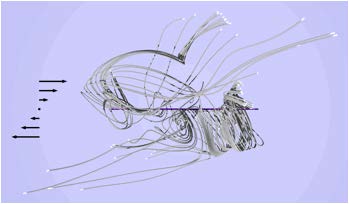
The aim of the project if to develop a stable and accurate numerical technique based on the Lattice-Boltzmann scheme to quantitatively study the diffusion behaviour of multicomponent droplets under flow. The ability of simulating correctly the diffusive dynamics of multicomponent droplets in presence of advection is per se an challenging and fundamental issue, the final purpose of the project is to develop numerical techniques suitable for the study and understanding of the so-called surface nano-droplets. These droplets are softly pinned to a substrate and their height is of the order of nanometers. They show an extremely long lifetime whose order is set by the macroscopic size of the system and by the value of the diffusion constant. From a first theoretical approach the resulting model shows a rich variety of dynamics for their dissolution.

Pinaki Kumar

Earthquake dynamics - Understanding Their physics from modeling soft glassy materials

pinakiDeveloping a quantitative connection between the physics of complex soft-glassy materials below yield stress and the dynamics of stick-slip faulting events leading to earthquakes. A novel formulation based on the multicomponent Lattice Boltzmann method is used to investigate fundamental issues related to natural seismicity, to find the interaction between spatially and temporally separated faulting events, as well as to determining the response of faults to external perturbations (i.e. induced seismicity) mimicking natural gas extraction and activities in injection wells. This earthquake model will then be fine tuned using inversion of surface seismic recordings.

Life in a Turbulent Environment

Life in a Turbulent Environment: How the Dynamic Ocean Shapes the Distribution, Diversity and Growth of Microorganisms 
Workshop at the Radcliffe Institute for Advanced Study at Harvard University, February 19-20, 2015
Link: http://projects.iq.harvard.edu/life_in_a_turbulent_environment

Executive Summary

This two-day workshop convenes expertise from the physical, biological and ocean sciences to stimulate a multidisciplinary discussion on how the dynamics of the ocean environment shapes life — ranging from individual plankton and microbes, to their collective ecosystems. How can we scale up our understanding from micro-environments to large-scale distributions, and from individual plankton to populations? How do the growth, transformation and transport of these populations therein affect the large-scale oceanic distributions of carbon, oxygen and nutrients? How does physical variability affect biological growth and patchiness, and how are physical and biological processes coupled through multiple space- and time-scales? From turbulence to ocean eddies — how does the dynamic ocean homogenize and differentiate environments to support growth? How do bio-diversity, species-composition, and size relate to the physical environment? And importantly, what changes can we anticipate in the evolution of planktonic and microbial marine ecosystems in the future? These are some of the questions that we will tackle through a series of talks and discussions in the convivial setting of the Radcliffe Institute at Harvard University.

Workshop Leaders

Amala Mahadevan

Homepage:  http://www.radcliffe.harvard.edu/people/amala-mahadevan

Federico Toschi

Homepage:  http://www.tue.nl/en/employee/ep/e/d/ep-uid/20089361/

David Nelson

Homepage:  https://www.physics.harvard.edu/people/facpages/nelson

Kim Alards

Lagrangian analysis of rotating Rayleigh-Bénard turbulence

KimAlards
Kim

Dynamics of particles in cylindrical rotating Rayleigh-Bénard convection (RRBC) is studied using DNS, not only to understand the physics of RRBC, but also to investigate whether particles with a feedback reaction on the flow can influence the dynamics within the cell.
Lagrangian statistics is used to characterise flow structures and heat transport and statistics obtained in the cell center and near the top- and bottom plates are compared to study the role of boundary layers in RRBC. The cylindrical set-up moreover allows us to compare results directly to particle-tracking experiments in RRBC.
On top of Lagrangian statistics also clustering dynamics of particles with different properties, such as thermal inertia and buoyancy, is investigated. By including both mechanical and thermal two-way coupling we can analyse the influence of particles on the flow and study whether we can trigger a transition to enhanced heat transport, which can be beneficial for industrial applications.

Alumni master students

2009 Alessandro Candini, Erasmus placement (University of Ferrara).

2010 Francesca Mancini, Erasmus student (University of Tor Vergata).

2010 Andrea Donini, Erasmus student (University of Udine)

2010 Enrico Pitton, Erasmus student (University of Udine)

2010 Riccardo Scatamacchia, Master student (University of Tor Vergata)

2011 Alessandro Dal Cin, Erasmus student (University of Udine)

2012 Eros Pecile, Erasmus student (University of Udine).

2012 Salvatore Lovecchio, master student (University of Udine).

2012 Simone Fisci, master student (University of Udine).

2012 Davide Picchi, master student (University of Brescia).

2013 Mauro Feletto, master student (University of Udine).

2013 Luca del Maschio, master student (University of Udine).

2013 Giulio de Magistris, master student (University of Roma Tor Vergata).

2014 Abdallah Daddi Moussa Ider, master student (University of Marseille, France).

2014 Kim Alards, master student (Eindhoven University of Technology).

2016 Koen Arens, master student (Eindhoven University of Technology).

2016 Jasper Meeusen, master student (Eindhoven University of Technology).

Abhineet Gupta

Photo-bioreactors: saving algae from turbulence!

guptaUnderstanding turbulent flow of (dense) suspensions is one of the key factors needed in order to upscale and thus increase the productivity of algae photo-bioreactors. Many studies investigated the rheology of dense suspensions in laminar flows, as well as the dynamics of dilute suspensions in turbulence. We study dense suspension of finite size particles (algae) under turbulent flow conditions using a Lattice Boltzmann solver. Direct numerical simulations will be used to assess the level of hydrodynamics stresses on individual algae. The knowledge of the multi-scale statistics of turbulent fluctuations, down to the individual alga, is key to develop models necessary to up-scale photo-bioreactor, select algae strain, optimize algae productivity and reduce bioreactors energy consumption.