 The energy deposition in a liquid drop on a nanosecond time scale by impact of a laser pulse can induce various reactions, such as vaporization or plasma generation. The hydrodynamic response of the drop can be extremely violent: The drop gets strongly deformed and propelled forward at several m/s, and subsequently fragments or even explodes.
We plan to use our existing experimental setup to study the laser-matter interaction for a high-energy laser pulse. Ultra high-speed cameras with frame rates up to
10^5 FPS and illumination techniques with a 10 ns exposure time are available in our lab. They allow us to link the laser impact to hydrodynamic events on the nanosecond time scale.
Author: toschi
Matteo Lulli
Evaporation of Droplets under flow

The aim of the project if to develop a stable and accurate numerical technique based on the Lattice-Boltzmann scheme to quantitatively study the diffusion behaviour of multicomponent droplets under flow. The ability of simulating correctly the diffusive dynamics of multicomponent droplets in presence of advection is per se an challenging and fundamental issue, the final purpose of the project is to develop numerical techniques suitable for the study and understanding of the so-called surface nano-droplets. These droplets are softly pinned to a substrate and their height is of the order of nanometers. They show an extremely long lifetime whose order is set by the macroscopic size of the system and by the value of the diffusion constant. From a first theoretical approach the resulting model shows a rich variety of dynamics for their dissolution.
Pinaki Kumar
Earthquake dynamics - Understanding Their physics from modeling soft glassy materials
 Developing a quantitative connection between the physics of complex soft-glassy materials below yield stress and the dynamics of stick-slip faulting events leading to earthquakes. A novel formulation based on the multicomponent Lattice Boltzmann method is used to investigate fundamental issues related to natural seismicity, to find the interaction between spatially and temporally separated faulting events, as well as to determining the response of faults to external perturbations (i.e. induced seismicity) mimicking natural gas extraction and activities in injection wells. This earthquake model will then be fine tuned using inversion of surface seismic recordings.
Life in a Turbulent Environment
Life in a Turbulent Environment: How the Dynamic Ocean Shapes the Distribution, Diversity and Growth of Microorganisms
Workshop at the Radcliffe Institute for Advanced Study at Harvard University, February 19-20, 2015
Link: http://projects.iq.harvard.edu/life_in_a_turbulent_environment
Executive Summary
This two-day workshop convenes expertise from the physical, biological and ocean sciences to stimulate a multidisciplinary discussion on how the dynamics of the ocean environment shapes life — ranging from individual plankton and microbes, to their collective ecosystems. How can we scale up our understanding from micro-environments to large-scale distributions, and from individual plankton to populations? How do the growth, transformation and transport of these populations therein affect the large-scale oceanic distributions of carbon, oxygen and nutrients? How does physical variability affect biological growth and patchiness, and how are physical and biological processes coupled through multiple space- and time-scales? From turbulence to ocean eddies — how does the dynamic ocean homogenize and differentiate environments to support growth? How do bio-diversity, species-composition, and size relate to the physical environment? And importantly, what changes can we anticipate in the evolution of planktonic and microbial marine ecosystems in the future? These are some of the questions that we will tackle through a series of talks and discussions in the convivial setting of the Radcliffe Institute at Harvard University.
Workshop Leaders
Amala Mahadevan

Homepage: http://www.radcliffe.harvard.edu/people/amala-mahadevan
Federico Toschi

Homepage: http://www.tue.nl/en/employee/ep/e/d/ep-uid/20089361/
David Nelson

Homepage: https://www.physics.harvard.edu/people/facpages/nelson
Alumni postdoc
Calin Dan -
Prasad Perkelar - Now faculty at TIFR Hyderabad (India)
Roger Jeurissen - Now at ACFD Consultancy (NL)
Badr Kaoui - Now postdoc at Universität Bayreuth (Germany)
Oleksii Rudenko - Now at ASML (NL)
Valentina Lavezzo - Now at Philips (NL)
Andrea Scagliarini - Now Staff Scientist, Helmholtz Institute Erlangen-Nürnberg for Renewable Energy (Germany)
Matteo Lulli - Now postdoc at University of Tor Vergata (Italy)
Alumni Ph.D. students
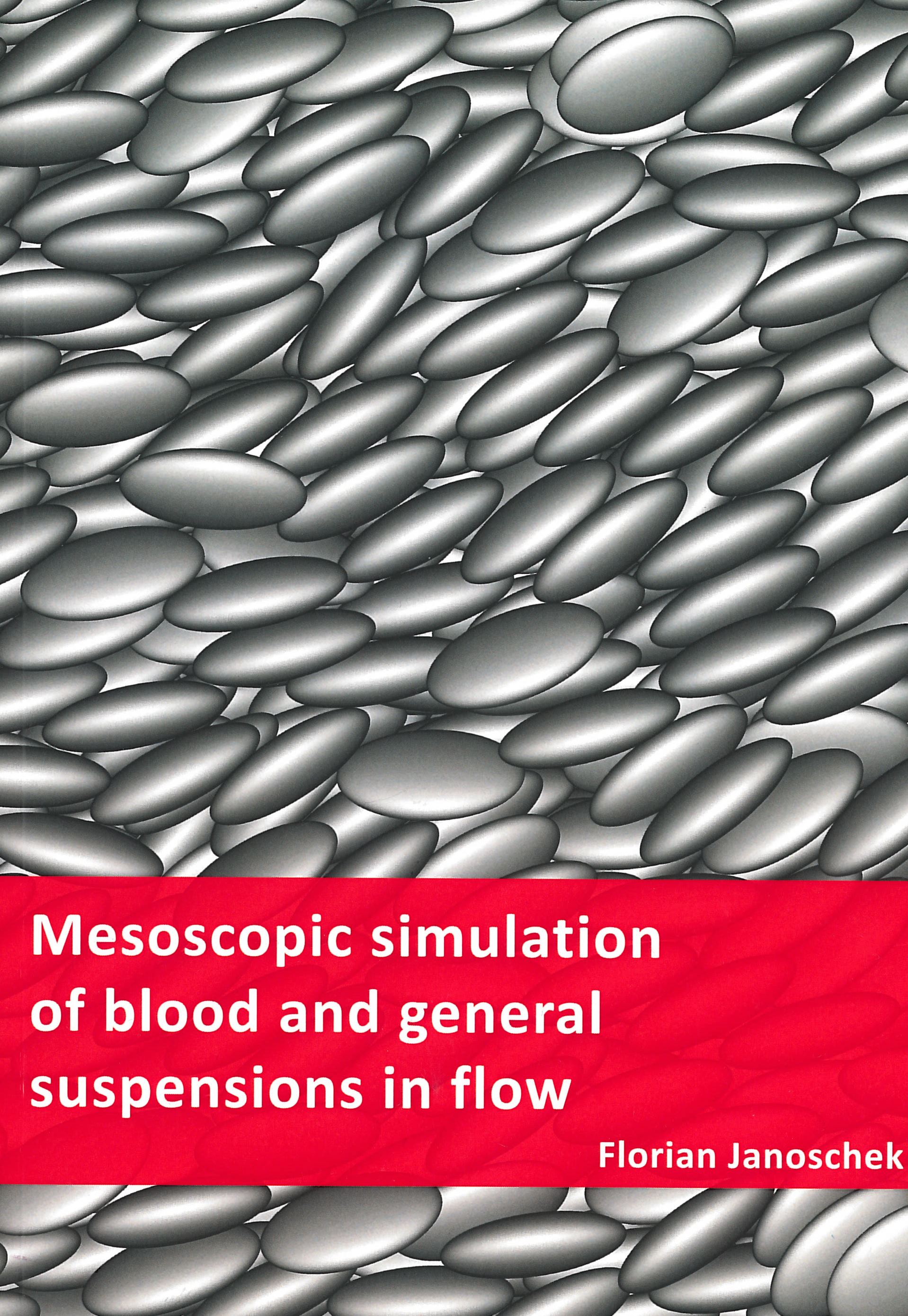
Florian Janoschek (defended 11 December 2013)
Theo Driessen (defended 20 December 2013, at University of Twente co-supervised with Detlef Lohse)

Sudhir Srivastava (defended 7 May 2014)

Riccardo Scatamacchia (defended 29 January 2015)

Francesca Storti (defended 8 December 2014)

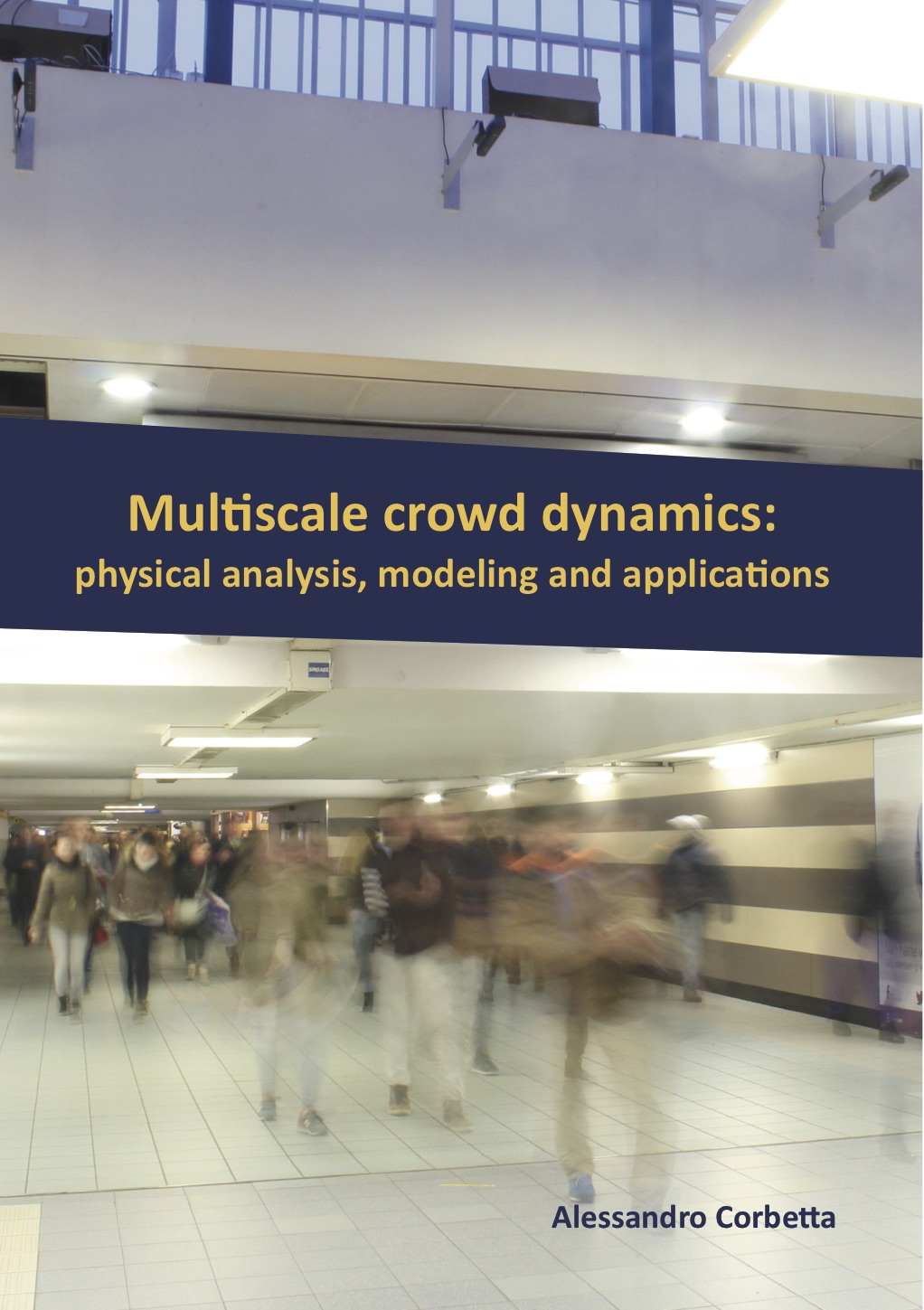
Alessandro Corbetta (defended 1 February 2016)
Michel van Hinsberg (defended 20 June 2016)

Francesca Tesser (defended 14 December 2016)
Sten Reijers
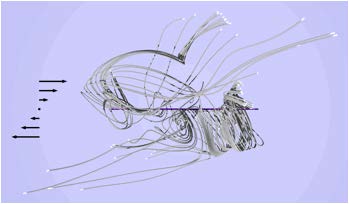
Compressible effects in drops impacted by a laser pulse
 The impact of a laser pulse onto a liquid droplet induces strong deformation and propulsion of the droplet. Here, we aim to understand the droplet dynamics by performing lattice-Boltzmann simulations and doing a theoretical analysis. In the simulations, we model the laser impact as a pressure pulse on the droplet surface. The lattice-Boltzmann method provides an ideal framework to do this, as it allows multiphase fluids where we can study: phase change, bubble nucleation and compressibility effects (e.g. shock waves traveling inside the drop) induced by the pressure pulse. On the theoretical side, we want to get key insight in how the pressure-waves propagate and how velocity-fields build up as function of different pressure conditions on the boundary of the droplet.